
SIMPLICITY & EFFICIENCY
About Our Company

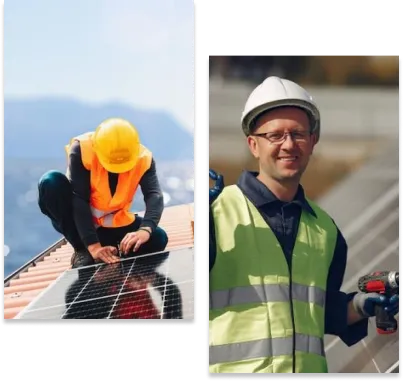
At NJ Solar Pros, we believe every New Jersey homeowner deserves an honest, knowledgeable partner when making the decision to go solar. Our mission is simple: provide high-quality solar solutions that help families reduce their energy costs, increase their home's value, and gain greater control over their monthly utility bills.
Founded by lifelong New Jersey resident Colby Welusz, NJ Solar Pros was built on the values of integrity, service, and doing what's right for every customer. Before entering the solar industry, Colby proudly served our country in the United States Air Force National Guard, completing two deployments while serving his community and nation. He also attended Stockton University, where he further developed the discipline and work ethic that continue to guide the way he does business today.
Having lived in New Jersey his entire life, Colby understands firsthand the financial burden that rising utility costs place on homeowners. Over the past several years, electric and natural gas rates have continued to climb, making it more expensive than ever to power a home. That's why he's passionate about helping families take control of those rising costs through reliable, affordable solar energy.
Unlike companies that simply sell solar panels, NJ Solar Pros focuses on educating homeowners and designing systems that make financial sense. Every home is different, which is why we take the time to evaluate your roof, your energy usage, and your long-term goals before recommending a customized solar solution. Our objective isn't just to install solar—it's to help you maximize your savings for decades to come.
Our experienced team stays current with New Jersey's ever-changing solar incentives, utility programs, permitting requirements, and local regulations. From your initial consultation through system design, permitting, installation, inspections, and activation, we manage every step of the process so you can enjoy a smooth, hassle-free experience.
We work with premium solar equipment, trusted installation partners, and proven engineering practices to ensure every system is built for long-term performance and reliability. Our commitment to quality workmanship and exceptional customer service has earned the trust of homeowners throughout New Jersey who are looking for dependable solar solutions.
Whether you're exploring solar for the first time or you're ready to start saving on your monthly electric bill, NJ Solar Pros is here to help. We'll answer your questions honestly, explain your available options, and guide you through every step of the process so you can make an informed decision with confidence.
When you choose NJ Solar Pros, you're not just choosing a solar company—you're choosing a local team that understands New Jersey, understands its energy challenges, and is committed to helping homeowners build a more affordable and energy-independent future.
TESTIMONIALS
What Client Our Says About Us
"Transitioning to solar with Solar Pros was the best home improvement decision I've made. Colby was so patient and respectful, taking the time to explain every detail about the system. Now, I have complete peace of mind during the summer months when the air conditioning is running constantly. Highly recommend!"
Sarah
Princeton, NJ
"I was skeptical about going solar at first, but Colby and the team at Solar Pros made the whole process incredibly smooth. They walked me through the numbers and the system has already lowered my energy bills well below what they projected. Outstanding, straightforward service!"
Mark
Medford, NJ
"If you are thinking about going solar, call Colby and Solar Pros. The crew was clean, fast, and highly respectful of our property. It feels fantastic to invest in clean energy while saving money every single month. A true 5-star experience!"
Dave & Elena
Sewell, NJ
POPULAR QUESTIONS
Asked Questions ?
Got Questions? Explore our FAQs for answers on solar costs, installation, savings, and maintenance. Learn more today!
Is New Jersey a good state for solar panels?
Yes. New Jersey consistently ranks among the best states for residential solar because of its high electricity rates, strong state incentive programs, favorable net metering policies, and federal tax credits. Even though New Jersey isn't the sunniest state, modern solar panels generate plenty of electricity throughout the year.
What solar incentives are available in New Jersey?
New Jersey homeowners may qualify for several incentives, including the Successor Solar Incentive (SuSI) Program, 1-to-1 net metering, a 100% sales tax exemption on qualifying solar equipment, and a property tax exemption on the added value of a solar energy system. Homeowners may also qualify for the Federal Residential Clean Energy Tax Credit.
How much can I save by installing solar panels?
Savings vary based on your home's energy usage, roof size, system size, utility rates, and available incentives. Many New Jersey homeowners significantly reduce or even eliminate their monthly electric bills while protecting themselves against future utility rate increases.
How long do solar panels last?
Most high-quality solar panels are designed to last 25 to 30 years or more. Many manufacturers offer 25-year performance warranties, and panels typically continue producing electricity well beyond that period, although at a slightly reduced efficiency.
Do solar panels work during cloudy days or in the winter?
Yes. Solar panels generate electricity whenever daylight is available, even on cloudy days. Production is lower during overcast weather than on sunny days, but New Jersey systems are designed to account for seasonal weather and continue producing energy year-round.
What happens if my solar panels produce more electricity than I use?
With New Jersey's net metering program, excess electricity generated by your system is sent back to the electric grid. Your utility provides credits on your bill, which can be used to offset electricity you consume when your system isn't producing enough power, such as at night.
Will solar panels increase my home's value?
In many cases, yes. Studies have shown that homes with owned solar energy systems often sell for more than comparable homes without solar. In New Jersey, the added value from a qualifying solar installation is exempt from property taxes, providing an additional financial benefit..
Do I need to replace my roof before installing solar panels?
Not always. If your roof is in good condition and has several years of life remaining, solar panels can typically be installed without issue. If your roof is nearing the end of its lifespan, replacing it before installation is often the most cost-effective option to avoid removing and reinstalling the panels later.
What maintenance do solar panels require?
Solar panels require very little maintenance. Rain usually keeps the panels clean, although occasional cleaning may improve performance if dirt, pollen, or debris accumulates. Most homeowners simply have their system inspected periodically to ensure it's operating efficiently.
How long does it take to install solar panels in New Jersey?
The physical installation usually takes one to three days, depending on the size and complexity of the system. However, the overall process—including design, permits, utility approvals, and inspections—typically takes one to three months before your system is approved to operate.

Powering a Brighter Future with Clean Energy.


Quick Links
Home
About Us
Services
Testimonials
FAQs
Blog